

Morton's Neuroma
Diagnosis and treatment of forefoot pain by our podiatrists in Montreal
What is Morton's neuroma?
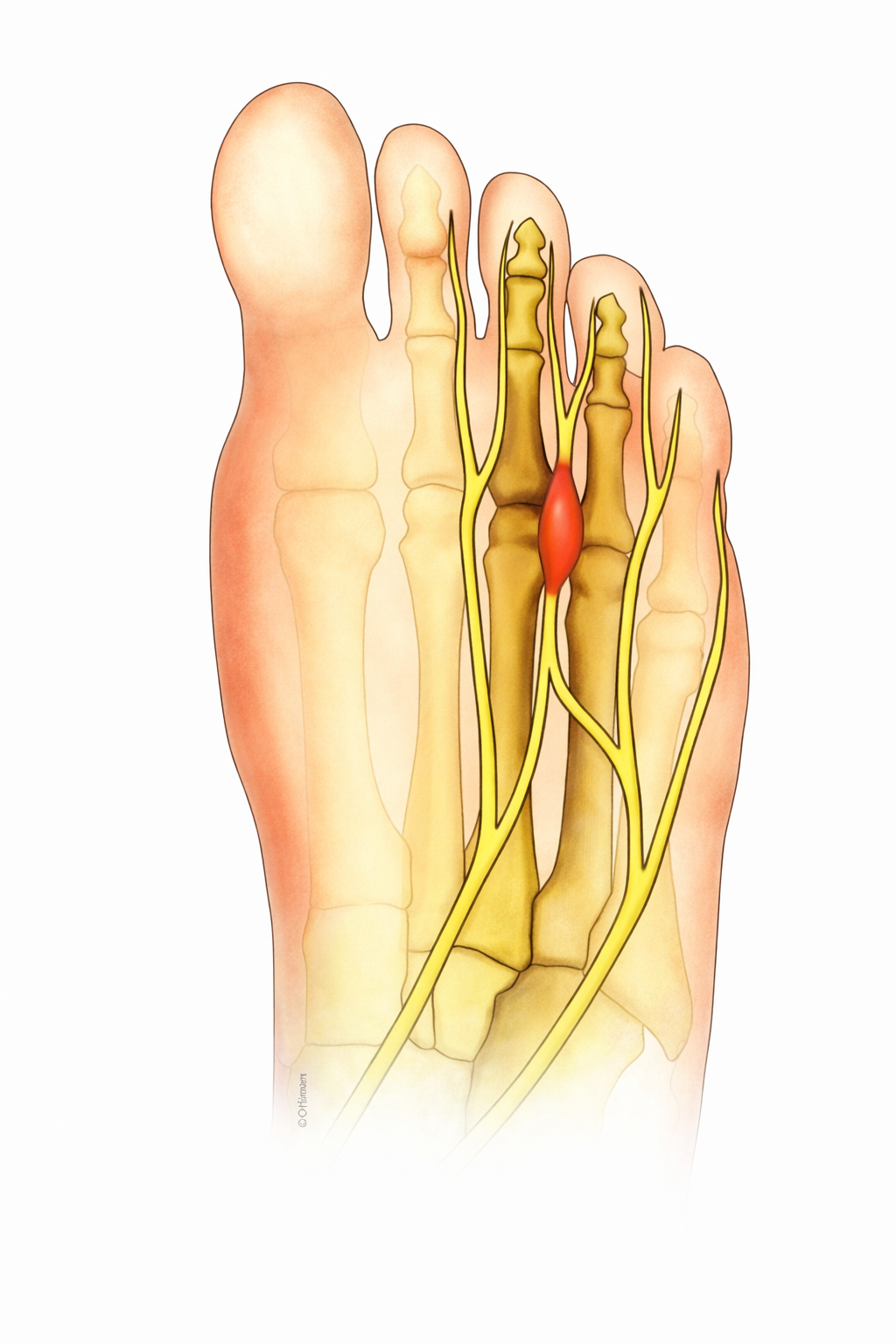
Morton's neuroma is an irritation or thickening of the nerve located between the toes, most often between the third and fourth. This condition causes burning pain, tingling, or numbness in the forefoot, which can affect walking and significantly reduce quality of life.
Several factors can contribute to the development of Morton's neuroma: wearing narrow shoes or high heels that compress the forefoot, certain foot deformities such as flat feet or hammertoes, as well as sports activities that exert repeated pressure on the metatarsal region.
Diagnosis is based on a thorough clinical examination performed by the podiatrist, who evaluates the location of the pain and reproduces the symptoms through specific maneuvers. If necessary, complementary exams such as foot ultrasound can be used to confirm the diagnosis and evaluate the size of the neuroma.
Don't let pain limit your activities. Clinique Podiatrique Mont-Royal & Griffintown offers a personalized evaluation and a tailored treatment plan to effectively relieve your Morton's neuroma and allow you to regain optimal walking comfort.
Treatments offered in clinic
Treatment for Morton's neuroma aims to reduce nerve compression and relieve pain. After evaluation of your condition by a podiatrist, a personalized approach may be recommended, including custom orthotics to decrease pressure on the nerve, advice on choosing appropriate shoes, and, if necessary, targeted therapies such as anti-inflammatory injections. In case of persistent pain, different management options may be considered to promote long-lasting relief.
Everything about Morton's neuroma
Find answers to the most common questions about Morton's neuroma and its treatment.
Book an appointment online or contact us
Don't wait for the pain to get worse. Our podiatrists are available in our two clinics in Montreal to evaluate your condition and guide you toward a tailored treatment.
